
Hi there! I’m here today to talk about a non-fiction title I was able to read early about incredible advances in medical technology and genome sequencing. **And as always, the work to support the Black community is not done, whether there is media coverage for it or not, so here is the link to click in order to support the Black Lives Matter movement in any way you can, and thank you to StarlahReads for compiling these resources. You can also visit the description of this video by booktuber Jess Owens, which has links to several additional resources about global events.**
As a kid, I was always interested in science. People used to tell me they could see me in a lab coat someday, and I was asking for microscopes and pipettes for holiday presents. I will forever credit my high school sophomore chemistry teacher with cementing my decision to pursue a college degree in the science field – I originally majored in biochemistry but quickly found clinical laboratory sciences to be a much better fit. Now, almost three years after graduation, I do indeed don a white coat five days a week working in a laboratory. Although my education [for now] is complete, I find that my thirst for knowledge, especially in fields unfamiliar to me, has yet to be extinguished. So, when I saw that The Genome Odyssey, a non-fiction by Dr. Euan Angus Ashley, was up on BookishFirst, I knew I wanted to get my hands on it. I also had a feeling that not many people would be itching to pick up a book about sequencing genes, so I saved my points and took my chances with the raffle – my hypothesis turned out to be correct (it’s either that, or I’m just lucky).
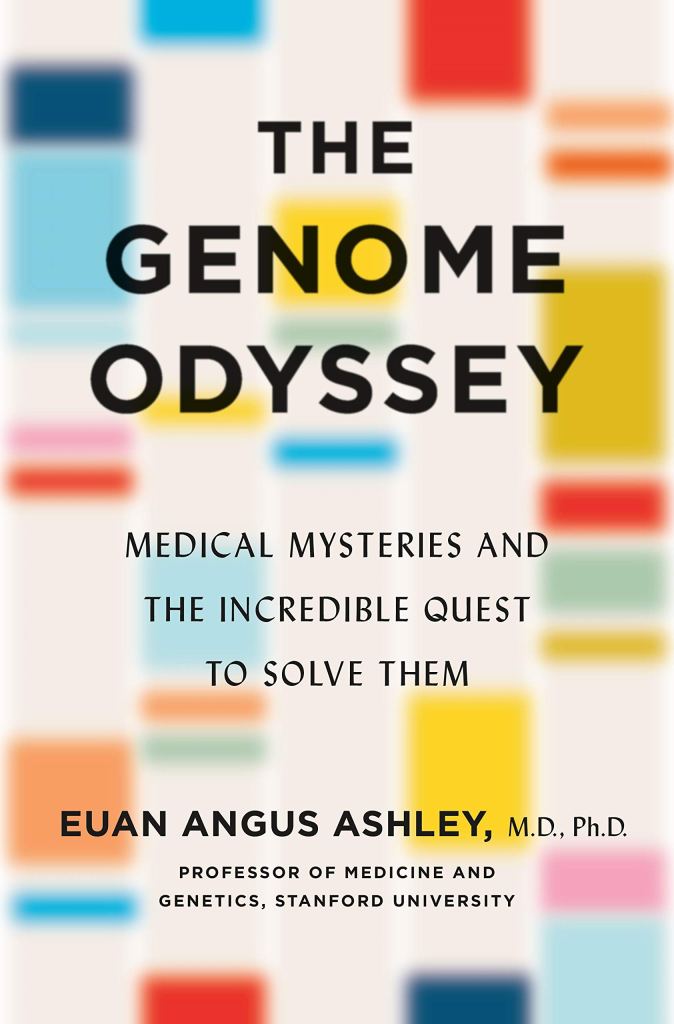
The Human Genome Project, an international collaborative research program whose goal was the complete mapping and understanding of all the genes of human beings, was completed in 2003, and with its completion came the first model mapping out (physically and genetically) the chromosomes of the human body. The genes in our DNA carry the instructions our body needs to decide everything from your eye and hair color to the way your cells fight off infection, and sequencing has helped us further understand how these genes can help or hinder bodily function. Since 2003, the cost of genome sequencing, once a multi-million dollar procedure, can cost no more than routine tests and has assisted in the diagnosis of several medical disorders that once left patients searching far and wide for answers. Dr. Euan Ashley walked into a colleague’s office at Standford University one afternoon in 2009 to discuss an upcoming conference, and instead left with burning questions that would lead to a future of using genome sequencing to save lives. As the title suggests, The Genome Odyssey takes the reader through the long and arduous history and adventures of genome sequencing – how far it has come in the past several decades, stories of those it has helped in its wake, and what it means for the scientific community’s future. Dr. Ashley’s humor, passion, and optimism shines through as he documents the dynamic group of researchers and doctor detectives always on the hunt for answers, and the pioneering patients who have forever opened up their lives to the medical community during their search for diagnoses and cures.
At times, this truly felt as though I was back in a lecture hall hearing Dr. Ashley talk about his contribution to the advancement of genome sequencing and recounting various patients that have entered his life throughout the process. I liked how when he was introducing his colleagues, some of whom have accomplished some incredible academic and scientific feats, he captured their humanity and personality, and that there was such a focus on the care of his patients when their anecdotes were scattered throughout the four parts. Whenever a new rare condition or piece of technology was introduced, the book would backtrack to the first time it was discovered, so it felt a little more textbook than usual, but it added context and emphasized how far science has come since then. I also want to highlight the last chapter, “The Road Ahead.” Dr. Ashley explains how sequencing technology will continue to improve, driving down the price of whole genome sequencing and allowing more patients to have access to this type of medical history. He also mentions that pathogen sequencing will also become more useful in a scientific setting, and in fact already has – when 2020 was gripped by a pandemic caused by SARS-CoV-2, within weeks the genome of the culprit virus was sequenced, providing much-needed information on how the virus was replicating, spreading, and how it can be combated with a vaccine. Maybe it is just my history and constant fascination starting at a young age, but science never really ceases to amaze me – even in times of constant chaos, the scientists were prepared and ready to fight.
In conclusion, I think anyone with an interest in genetics, sequencing, or is looking for more scientific nonfiction will get exactly what they want out of this book. Dr. Ashley outlines every expectation in his preface, so if those first eight pages or so pique your interest I think you’ll enjoy the rest of the book, or at least learn something you didn’t know before. The Genome Odyssey is set to release on February 23rd, 2021 (which should be the day this post goes live), so please join me in wishing it a happy book birthday, and consider picking up a copy for yourself. *Thank you to BookishFirst and the publisher, Celadon Books, for the early copy, all thoughts and opinions are my own.*
Where to find The Genome Odyssey:
Bookshop
Amazon
Goodreads
Macmillan




 Thoughts About Things